Categories
Local Seo Tips Uncategorized Web Designing Tips

PPC Versus SEO: Which Strategy Delivers Better ROI for Your Business

PPC Versus SEO: Which Strategy Delivers Better ROI for Your Business

Recent Blog

Transform Your Business with Optimistx Tech Lab!

Take your digital marketing to the next level with data-driven strategies and innovative solutions. Let’s create something amazing together!
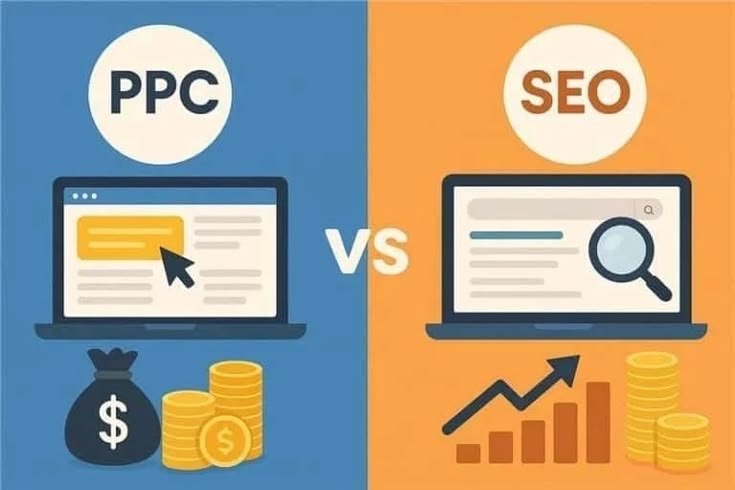
PPC versus SEO

Which Strategy Delivers Better ROI for Your Business

Should we invest in PPC or SEO is one of the most common questions business owners ask, and the honest answer is rarely one or the other. But if you are working with a limited budget and need to make a smart first move, understanding how these two channels actually behave will save you months of guesswork.

This is not a case for SEO always wins or PPC always wins. It is a practical breakdown of what each channel does well, where each falls short, and how to decide what is right for your business right now.

The Core Difference

Search Engine Optimization earns organic visibility in search results through content, technical optimization, and authority building. It is a compounding, long term asset.

Pay Per Click buys visibility instantly through paid ads on platforms like Google Ads and Meta. You pay for every click, and visibility stops the moment you stop paying.

Neither is better in the abstract. They solve different problems on different timelines.

PPC: Strengths and Limitations

Where PPC Wins

  • Speed, since campaigns can go live and start generating traffic within days
  • Precise targeting by keyword intent, demographics, location, device, and even retargeting people who already visited your site
  • A strong testing ground for which offers, headlines, and landing pages actually convert before investing heavily in organic content around them
  • Full control over spend and pacing

Where PPC Falls Short

  • Visibility disappears the moment budget stops
  • Costs per click can rise significantly in competitive industries
  • Requires ongoing management to avoid wasted spend
  • Users increasingly recognize and sometimes distrust paid ad placements

SEO: Strengths and Limitations

Where SEO Wins

  • Compounding value, since a well ranked page keeps generating traffic for months or years with minimal added spend
  • Trust, as many users click organic results over ads, especially for research heavy or high consideration purchases
  • Lower long term cost per acquisition once rankings are established
  • A broader footprint, since good SEO content can rank for dozens of related keyword variations, not just one paid keyword

Where SEO Falls Short

  • Takes months to show meaningful results, especially for newer or lower authority sites
  • Rankings can fluctuate with algorithm updates
  • Requires sustained investment in content, technical health, and link building
  • Harder to control precisely how much traffic arrives when

Cost Comparison: A Realistic Look

Factor

PPC

SEO

Time to first results

Days

Three to six or more months

Cost behavior

Pay per click, ongoing

Upfront investment, compounding return

Visibility after stopping

Disappears immediately

Persists

Best for

Immediate leads, product launches, testing offers

Long term brand growth, sustainable lead flow

Control

High, precise

Moderate, algorithm dependent

So Which Should You Choose

Choose PPC First If

  • You need leads or sales quickly, such as for a new business, a seasonal push, or a product launch
  • You want to test messaging and offers before committing to organic content
  • You are in a competitive niche where organic ranking will take significant time

Choose SEO First If

  • You are building for the long term and can invest patiently
  • Your budget is limited and needs to stretch further over time
  • Your industry has strong informational search intent, meaning people research before buying

Choose Both If

You want immediate visibility from PPC while building long term organic equity through SEO in parallel. This is the approach most established brands eventually land on, and it is the fastest way to dominate a search results page with both a paid ad and an organic listing.

A Smarter Way to Think About Budget Allocation

Rather than treating this as either or, consider a phased approach:

  1. Months one through three: lean PPC heavy to generate immediate leads while SEO foundations, including technical fixes, content strategy, and on page optimization, are being built.
  2. Months four through nine: gradually shift budget toward SEO and content as organic rankings begin climbing, while maintaining PPC for high intent, high value keywords.
  3. Month ten and beyond: SEO carries a growing share of traffic at a lower cost per lead, while PPC is used strategically for promotions, retargeting, and competitive keyword defense.

Frequently Asked Questions

Is PPC a waste of money if I already rank well organically?

Not necessarily. Even top ranking pages benefit from PPC for high commercial intent keywords, retargeting past visitors, and defending against competitor ads appearing above your organic listing.

How much should a small business budget for PPC versus SEO?

It depends on goals and timeline, but a common starting approach is to split budget roughly evenly in the first few months, then shift more toward SEO as organic momentum builds, assuming lead quality and cost per acquisition data support the shift.

Can I do SEO and PPC with the same keywords?

Yes, and it is often smart. Ranking both an ad and an organic result for the same high value keyword increases your share of the search results page and overall click through rate.

There is no universal answer. The right PPC to SEO ratio depends on your industry, budget, and timeline. Optimistx Tech Lab builds data driven strategies that combine both channels intelligently, so you get immediate leads and long term, compounding growth.

Get a Free Strategy Consultation

Categories
Local Seo Tips Uncategorized Web Designing Tips

Website Design Trends 2026: How to Build a Site That Converts

Website Design Trends 2026: How to Build a Site That Converts

Home / Single Post

Recent Blog

How Small Businesses Can Rank Number One on Google!

If someone searches for your service near them right now, does your business show up? For most small businesses, the honest answer is not yet, and that is costing real customers every single day.

website design that converts

How to Build a Site That Converts

A beautiful website that does not convert is an expensive brochure. In 2026, design and conversion are not separate conversations. The sites winning the most customers are the ones where every visual decision is also a business decision.

Here is what actually separates a website that just looks nice from one that consistently turns visitors into leads and customers.

Why Most Websites Underperform

Most underperforming websites share the same root causes:

  • They are built to impress the business owner, not to guide the visitor
  • Load times are slow, especially on mobile
  • The call to action is unclear, buried, or repeated too rarely
  • Copy talks about the company instead of the customer problem
  • There is no clear next step on any given page

Fixing these issues is often more impactful than a full visual redesign.

Eight Principles of a High Converting Website

1. Speed Is a Design Decision

Every second of load time past two to three seconds costs you conversions. Large uncompressed images, bloated page builders, and unnecessary animations are the most common culprits. Prioritize:

  • Compressed, next generation image formats such as WebP and AVIF
  • Lazy loading below the fold
  • Minimal third party scripts
  • A lightweight, well coded theme or framework

2. Clarity Beats Cleverness

Visitors decide whether to stay within seconds. Your homepage headline should immediately answer three questions: what do you do, who is it for, and why should I care. Clever wordplay that requires a second read costs you visitors who will not give you that second read.

3. One Primary Call to Action Per Page

Pages with multiple competing calls to action, such as buy now, learn more, subscribe, and contact us all on one page, create decision fatigue. Pick one primary action per page and repeat it in the hero section, mid page, and footer.

4. Mobile First Is Not Optional

The majority of traffic to most business websites is mobile. Design for the small screen first, then scale up, not the reverse. Test tap targets, form fields, and menu usability on an actual phone, not just a resized browser window.

5. Build Trust Above the Fold

Visitors are skeptical by default. Reinforce credibility early with:

  • Client logos or review scores
  • Specific numbers such as years in business, clients served, or results delivered
  • Real photos over generic stock imagery where possible

6. Use Visual Hierarchy to Guide the Eye

Size, color, contrast, and white space should direct attention in a deliberate order: headline, then supporting proof, then call to action. If everything on the page is competing for attention equally, nothing wins.

7. Forms Should Ask for Less

Every additional form field reduces completion rates. Ask only for what you need at this stage of the relationship. You can always gather more information later.

8. Design for Search Engines Too

A great looking site that search engines cannot crawl or understand will not get discovered. That means clean semantic HTML, proper heading structure, fast Core Web Vitals scores, and structured data, not just pretty visuals.

2026 Design Trends Worth Adopting Selectively

  • Bold, high contrast typography for headlines to improve scannability
  • Micro interactions such as subtle hover states and button feedback that add polish without slowing the page down
  • AI assisted personalization, showing different content blocks based on visitor behavior or source
  • Minimalist, content first layouts that reduce clutter and load faster
  • Accessibility first design, including proper contrast ratios, keyboard navigation, and alt text, which is increasingly a ranking and compliance factor, not just a nice to have

Trends should support conversion goals, not distract from them. If a trend does not help visitors understand or act faster, skip it.

A Simple Website Conversion Audit

Ask these questions about your current site:

  1. Can a first time visitor tell what you do within five seconds?
  2. Does the site load in under three seconds on mobile?
  3. Is there one clear next step on every page?
  4. Do your forms ask only for essential information?
  5. Is trust, such as reviews, results, and credentials, visible without scrolling?
  6. Does the design work as well on a phone as on a desktop?

If you answered no to two or more, your website is likely leaving conversions on the table.

Frequently Asked Questions

How often should I redesign my website?

Rather than full redesigns every few years, aim for continuous improvement, testing headlines, calls to action, and page layouts based on real user data every few months.

Does a custom design convert better than a template?

Not automatically. A well optimized template built around clear conversion principles will often outperform a custom design that ignores user behavior. Strategy matters more than originality.

How much does a conversion focused website cost?

Costs vary widely based on complexity, but the right question is not the upfront cost. It is the return. A site that converts even one to two percent better can pay for itself many times over.

Optimistx Tech Lab designs and develops websites around one goal: turning visitors into customers. From UI UX strategy to development and ongoing conversion optimization, we build sites that look sharp and perform even sharper.

Get a Free Website Audit

Categories
Local Seo Tips Web Designing Tips

Local SEO Guide 2026: How Small Businesses Can Rank Number One on Google

Local SEO Guide 2026: How Small Businesses Can Rank Number One on Google

Home / Single Post

Recent Blog

Why SMBs Need SEO in 2026 And What Happens If You Ignore It

If you run a small or medium-sized business, you’ve probably heard that SEO is important.

local SEO for small businesses

How Small Businesses Can Rank Number One on Google

If someone searches for your service near them right now, does your business show up? For most small businesses, the honest answer is not yet, and that is costing real customers every single day.

Local SEO is how nearby customers find you on Google Search and Google Maps when they are ready to buy. Unlike traditional SEO, which competes nationally or globally, local SEO is a fight you can actually win, even against bigger competitors, because proximity, relevance, and trust signals matter more than raw domain authority.

This guide breaks down exactly what is working in local search right now, in plain language, with a checklist you can start using today.

Why Local SEO Matters More Than Ever in 2026

Search behavior has shifted. More people are searching with intent to act immediately, using phrases like open now, near me, or same day, and Google local results now appear above organic results for the vast majority of local queries. If you are not in that local map pack, you are often invisible before the customer even scrolls.

On top of that, AI powered search summaries are increasingly pulling from local business data, meaning the businesses with clean, complete, consistent information are the ones getting recommended, not just ranked.

The Seven Pillars of Local SEO That Actually Move the Needle

1. Optimize Your Google Business Profile

Your Google Business Profile is the single highest leverage local SEO asset you own. Make sure it includes:

  • Accurate business name, address, and phone number
  • The correct primary category, plus relevant secondary categories
  • A complete, keyword rich business description
  • Updated business hours, including holidays
  • Fresh photos added regularly, since listings with more photos get significantly more requests for directions and website clicks
  • Products or services listed with pricing where possible
  • Weekly posts covering offers, updates, and events to signal activity

2. Get Your Business Name, Address, and Phone Number Consistent Everywhere

Consistency of your business name, address, and phone number across your website, Google Business Profile, and every directory such as Yelp, Bing Places, and industry directories is a core trust signal. Even small inconsistencies, like a wrong suite number or a different abbreviation for street, can quietly hurt your rankings. Audit your top twenty citations every quarter.

3. Build Location Specific Landing Pages

If you serve multiple cities or neighborhoods, do not rely on one generic locations page. Create individual, genuinely useful pages for each area you serve, with:

  • Unique content that is not simply copied with the city name swapped
  • Local landmarks and testimonials from customers in that area
  • An embedded Google Map
  • Location specific schema markup

4. Earn and Respond to Reviews

Review volume, velocity, and recency are direct local ranking factors. More importantly, they drive click through rate and conversion. Ask happy customers directly, by text or email after service, and respond to every review, positive and negative, within forty eight hours. A thoughtful response to a negative review often builds more trust than five five star reviews.

5. Build Local Citations and Local Backlinks

Get listed in reputable local directories, local chambers of commerce, and industry associations. Local backlinks from community sites, local news coverage, and sponsorships carry more local ranking weight than generic national directory links.

6. Optimize On Page Local Signals

Your homepage and service pages should naturally include:

  • City and region names in title tags, headers, and body copy
  • Local business schema markup
  • A visible business name, address, and phone number in the footer of every page
  • An embedded map on your Contact page

7. Mobile Speed and Core Web Vitals

The majority of local searches happen on mobile, often while someone is already out and about. A slow loading site kills conversions even if you rank well. Aim for a mobile load time under two and a half seconds and pass Google Core Web Vitals thresholds.

Local SEO Checklist To Save and Use

  • Google Business Profile fully completed and verified
  • Business name, address, and phone number consistent across your website and top twenty citations
  • Individual landing pages for each service area
  • Active review generation process in place
  • Local schema markup implemented
  • Mobile site speed under two and a half seconds
  • Weekly Google Business Profile posts scheduled
  • Monthly local ranking report reviewed

Common Local SEO Mistakes to Avoid

  • Keyword stuffing your Google Business Profile name, which violates Google guidelines and risks suspension
  • Ignoring negative reviews instead of responding professionally
  • Duplicate location pages with thin, copied content
  • Inconsistent business name, address, and phone number across directories
  • No tracking, since without measuring map pack rankings and profile insights monthly you are optimizing blind

How Long Does Local SEO Take to Work

Most businesses start seeing measurable movement in Google Business Profile visibility within four to eight weeks, with more significant organic and map pack gains building over three to six months as citations, reviews, and content compound. Local SEO is not a one time fix. It is an ongoing process that rewards consistency.

Frequently Asked Questions

Do I need a website to rank locally?

A website strengthens your local SEO significantly and is where a lot of trust and conversion signals get built, but a well optimized Google Business Profile can generate visibility even before your site is fully built out.

How many reviews do I need to rank well?

There is no magic number, but review volume relative to competitors in your area matters. Focus on steady, consistent review generation rather than a one time push.

Is local SEO worth it for service area businesses without a storefront?

Yes. Google allows service area businesses to set a defined service radius on their Business Profile, and the same optimization principles apply.

Local search is one of the fastest, most measurable ways to grow a small or mid sized business, but it takes consistent, correct execution across dozens of moving parts. Optimistx Tech Lab builds full local SEO strategies, from Google Business Profile optimization to citation building and location page development, backed by transparent monthly reporting.

Get a Free Local SEO Audit

Categories
Local Seo Tips Uncategorized Web Designing Tips

Why SMBs Need SEO in 2026 And What Happens If You Ignore It

Why SMBs Need SEO in 2026 And What Happens If You Ignore It

Home / Single Post

Recent Blog

Transform Your Business with Marko!

Take your digital marketing to the next level with data-driven strategies and innovative solutions. Let’s create something amazing together!

Why SMBs Need SEO in 2026 And What Happens If You Ignore It

If you run a small or medium-sized business, you’ve probably heard that SEO is important. But between managing operations, serving customers, and keeping the lights on, it can be easy to push it to the back burner — especially when it feels abstract, slow, and expensive.

Here’s the reality: in 2026, SEO isn’t a nice-to-have. It’s one of the most powerful and cost-effective tools available to SMBs — and the gap between businesses that invest in it and those that don’t is widening every single month.

This article explains exactly why SEO matters for small and medium-sized businesses right now, what the consequences of ignoring it are, and how to get started without breaking the bank.

"Frequently asked questions about digital marketing services"
What Is SEO And Why Does It Matter?

Search Engine Optimisation is the process of improving your website so it appears higher in search results when people type in queries related to your business. When someone searches for “accountant for small business in Manchester” or “affordable web design agency USA” and your website appears on the first page — that’s SEO working for you.

Unlike paid advertising, where your visibility disappears the moment your budget runs out, SEO builds compounding, long-term value. A well-optimised page or blog article can drive hundreds of qualified visitors to your website every month, for years, without ongoing ad spend.

For SMBs operating with tighter budgets and smaller teams, this makes SEO one of the highest-ROI investments in the digital marketing toolkit.

Your Customers Are Already Searching The Question Is Whether They Find You

Think about the last time you needed to find a new supplier, book a service, or research a product. Chances are you went straight to Google. Your customers do exactly the same thing — and research consistently shows that the vast majority of clicks go to the top few results on the first page.

If your business isn’t ranking on page one for the search terms your ideal customers are using, you’re invisible to them at the exact moment they’re ready to buy. They find your competitor instead — and in most cases, they never even know you exist.

AI Has Made SEO More Accessible for SMBs Than Ever Before

One of the biggest barriers SMBs have historically faced with SEO is the cost and complexity. Hiring a full-time SEO expert, producing regular content, and running technical audits used to require significant budget and specialist knowledge.

In 2026, AI has changed that equation entirely. AI-powered SEO tools can now:

  • Identify the exact keywords your target customers are searching for in minutes.
  • Analyse competitor websites to reveal content gaps and ranking opportunities.
  • Generate optimised content briefs and first drafts for blog articles and service pages.
  • Run automated technical audits and flag issues before they hurt your rankings.
  • Predict which content topics are trending and likely to drive traffic.

At Optimistx Tech Lab, we use these AI tools as part of every SEO engagement — allowing us to deliver faster results, better targeting, and smarter content strategies for our SMB and startup clients at a fraction of the traditional cost.

Local SEO: The Untapped Goldmine for SMBs

If you serve customers in a specific city, region, or country — local SEO is one of the most powerful opportunities available to your business right now.

Local SEO means optimising your online presence so your business appears in results when people nearby search for what you offer. This includes Google Business Profile optimisation, local keyword targeting, review management, and local citations.

The numbers are striking: searches with local intent — phrases like “near me” or searches that include a city name — have grown dramatically year on year. And critically, local searches convert at a far higher rate than general searches, because the person is already in buying mode.

What Happens If You Ignore SEO?

The cost of not investing in SEO isn’t just missed traffic — it’s compounding market share loss. Here’s what typically happens to SMBs that delay:

  1. Competitors who invest now build domain authority that becomes increasingly difficult and expensive to overtake later.
  2. Your website stagnates while theirs grows — the gap in rankings, traffic, and leads widens every month.
  3. You become more dependent on paid advertising as a crutch, with rising costs and no long-term asset to show for it.
  4. Potential customers who search for your services never find you — and many will never search for you by name because they don’t know you exist.

The businesses that dominate Google search results in 2027 and beyond are the ones making SEO investments today. The best time to start was a year ago. The second best time is now.

How to Get Started With SEO as an SMB

You don’t need a huge budget or a large team to start seeing results from SEO. Here’s a practical starting point:

  • Audit your current website for technical issues — page speed, mobile usability, broken links.
  • Set up and fully optimise your Google Business Profile if you serve local customers.
  • Identify 10–15 core keywords that your ideal customers are searching for.
  • Create or update your key service and location pages with keyword-optimised content.
  • Start a blog and publish one helpful, keyword-targeted article per week.
  • Build backlinks by getting listed in relevant industry directories and partnering with complementary businesses.

If this sounds overwhelming, that’s exactly what a digital marketing partner is for. At Optimistx Tech Lab, we handle the full SEO strategy — from the initial audit right through to ongoing content and reporting — so you can focus on running your business.

The Bottom Line

SEO in 2026 is not optional for SMBs — it’s one of the most important investments you can make in the long-term growth of your business. With AI making it more accessible and affordable than ever, there has never been a better time to get started.

The businesses that invest in SEO today will be the ones dominating search results, capturing leads, and growing sustainably for years to come. Don’t let your competitors get there first.